
 Send Inquiry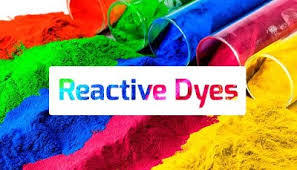
Reactive Hot Dyes
Product Details:
- Ph Level 6-7 (1% solution)
- Size Standard Commercial Packaging
- Taste Odorless
- Strength Standard Shade Strength
- Solubility Soluble in Water
- Grade Industrial Grade
- Melting Point Decomposes
- Click to View more
X
Reactive Hot Dyes Price And Quantity
- 250 Kilograms
- Excellent to washing, moderate to light
- HDPE Bags or Drums
- 80-85°C
- Yellow, Red, Blue, Orange, Various Shades
- Exhaust, Pad-Dry, Pad-Steam
- Anionic
- Store in a cool, dry place, away from sunlight
Reactive Hot Dyes Product Specifications
- Reactive Hot Dyes
- NO
- 0.60 Gram per cubic centimeter(g/cm3)
- Decomposes
- Textile Dyeing & Printing
- Odorless
- Standard Shade Strength
- Soluble in Water
- Powder
- Industrial Grade
- 6-7 (1% solution)
- Standard Commercial Packaging
- Reactive Dye
- Good
- 1.5%
- Bright & Consistent
- Fine Powder
- Varies per dye structure
- 32041600
- Cotton, Viscose, Silk, Wool
- 2 Years
- Mixed, varies per dye component
- 99%
- Excellent
- C21H14Cl2N6Na2O7S2 (Example: Reactive Red 195, varies)
- Good to Light and Washing
- Excellent to washing, moderate to light
- HDPE Bags or Drums
- 80-85°C
- Yellow, Red, Blue, Orange, Various Shades
- Exhaust, Pad-Dry, Pad-Steam
- Anionic
- Store in a cool, dry place, away from sunlight
Reactive Hot Dyes Trade Information
- 100000 Kilograms Per Month
- 3 Days
Product Description
Committed towards satisfying our customers, we are involved in trading and supplying a wide stock of Reactive Hot Dyes. The most important characteristic of these reactive dyes are the formation of covalent bonds with the substrate to be colored, i.e. the dyes form a chemical bond with cellulose, which is the main component of cotton fibers. The dyestuff thus becomes a part of the fibre and is much less likely to be removed by washing than are dyestuffs that adhere by adsorption. Besides, this stock of Reactive Hot Dyes is highly appreciated in the market.
Features:
- Easy to use
- Highly stable
- Balanced and precise composition
| Reactive Hot Dyes | FASTNESS PROPERTIES | |||||
| Light | Washing | Perspiration | Hypochlorite | Dischargeability | ||
| Reactive Yellow H7GL Reactive Yellow - 57 |
6 | 5 | 5 | 2 | G | |
| Reactive Yellow H4G Reactive Yellow - 18 |
6 | 5 | 5 | 1 | G | |
| Reactive Gol. Yellow HR Reactive Yellow - 12 |
6 | 5 | 5 | 3 | F | |
| Reactive Orange H2R Reactive Orange - 13 |
4 | 5 | 4 | 4 | P | |
| Reactive Red H8B Reactive Red - 31 |
4 | 4 | 4 | 3 | P | |
| Reactive Red 6BX Reactive Red - 76 |
4 | 4 | 5 | 2 | P | |
| Reactive Red Brown H4R Reactive Brown - 9 |
4 | 5 | 4 | 5 | P | |
| Reactive Magenta HB Reactive Violet - 13 |
4 | 4 | 4 | 1 | F | |
| Reactive Purple H3R Reactive Violate - 1 |
6 | 4 | 5 | 4 | P | |
| Reactive Black HN Reactive Black - 8 |
5 | 4 | 5 | 4 | P | |
| Reactive Blue H5R Reactive Blue - 13 |
5 | 5 | 5 | 1 | P | |
| Reactive Blue H2R |
4 | 4 | 4 | 2 | P | |
| Reactive Blue H3RP Reactive Blue - 49 |
4 | 5 | 4 | 2 | P | |
| Reactive Tur. Blue H5G Reactive Blue - 25 |
5-6 | 4-5 | 3 | 3-4 | P | |
| Reactive Navy Blue RX Reactive Blue - 59 |
3 | 3-4 | 4-5 | 1 | P | |

Wide Colour Range and High Purity
Reactive Hot Dyes are available in a wide spectrum of shades, including yellow, red, blue, orange, and various vibrant tones. Manufactured to an industrial grade with a purity of 99%, these dyes meet stringent quality standards for textile production. Their fine powder form allows for seamless dissolution in water, guaranteeing uniform color results across different textile fibers.
Efficient Fixation and Dyeing Methods
Formulated for excellent performance at fixation temperatures between 80-85C, these dyes are suitable for various dyeing processesexhaust, pad-dry, and pad-steam methods. The ionic, anionic nature ensures even penetration and consistent results on cotton, viscose, silk, and wool. Textile manufacturers enjoy reliable, bright shades with steadfast fastness to washing and moderate resistance to light exposure.
Safe Handling and Storage
Reactive Hot Dyes are odorless, non-poisonous, and offer a shelf life of two years when stored correctly. It is recommended to keep them in a cool, dry place away from sunlight, packed safely in HDPE bags or drums to preserve quality. Additionally, the moisture content does not exceed 1.5%, ensuring long-term stability during storage and transportation.
FAQs of Reactive Hot Dyes:
Q: How should Reactive Hot Dyes be stored to maintain their effectiveness?
A: Reactive Hot Dyes should be stored in a cool, dry place away from direct sunlight. It is best to keep them in their original HDPE bags or drums to prevent moisture ingress and maintain a shelf life of up to two years.Q: What dyeing methods are compatible with Reactive Hot Dyes?
A: These dyes are versatile and suitable for exhaust, pad-dry, and pad-steam dyeing techniques. This flexibility ensures compatibility with a wide range of textile manufacturing processes, enhancing productivity and color consistency.Q: What types of fibers can be dyed using Reactive Hot Dyes?
A: Reactive Hot Dyes are specifically formulated for cellulose and protein fibers, making them ideal for cotton, viscose, silk, and wool. This adaptability makes them a popular choice across textile industries.Q: When is the optimal fixation temperature for using Reactive Hot Dyes?
A: For best results, Reactive Hot Dyes should be fixed at a temperature between 80-85C. This temperature range ensures stable bonding of color to fibers and optimal fastness performance.Q: What are the main benefits of choosing Reactive Hot Dyes for textile applications?
A: Key benefits include a broad color range, excellent washing fastness, good resistance to light and rubbing, and compatibility with various dyeing methods. The dyes produce vivid, bright shades and maintain color consistency throughout production.Q: Are Reactive Hot Dyes safe and environmentally friendly?
A: Yes, Reactive Hot Dyes are non-poisonous and odorless. Their use on suitable fibers and adherence to recommended handling and disposal guidelines help minimize environmental impact during textile processing.Tell us about your requirement

Price:
Quantity
Select Unit
- 50
- 100
- 200
- 250
- 500
- 1000+
Additional detail
Mobile number
Email

Other Products in 'Reactive Dyes' category



Contact Details

- PLOT NO - I/5617, PHASE-2 VATVA, GIDC,Ahmedabad - 382445, Gujarat, India
- Phone : 08071794270

- Mr Jitendra Rakholiyaa (Partner )
- Mobile : 08071794270
- sales4@parshwadyes.com
- Customer Care :+919909903636
 Send Inquiry
 Send Inquiry
 Send SMS
 Call Me Free

PARSHWANATH DYESTUFF INDUSTRIES
All Rights Reserved.(Terms of Use)
Developed and Managed by Infocom Network Private Limited.
Developed and Managed by Infocom Network Private Limited.


